
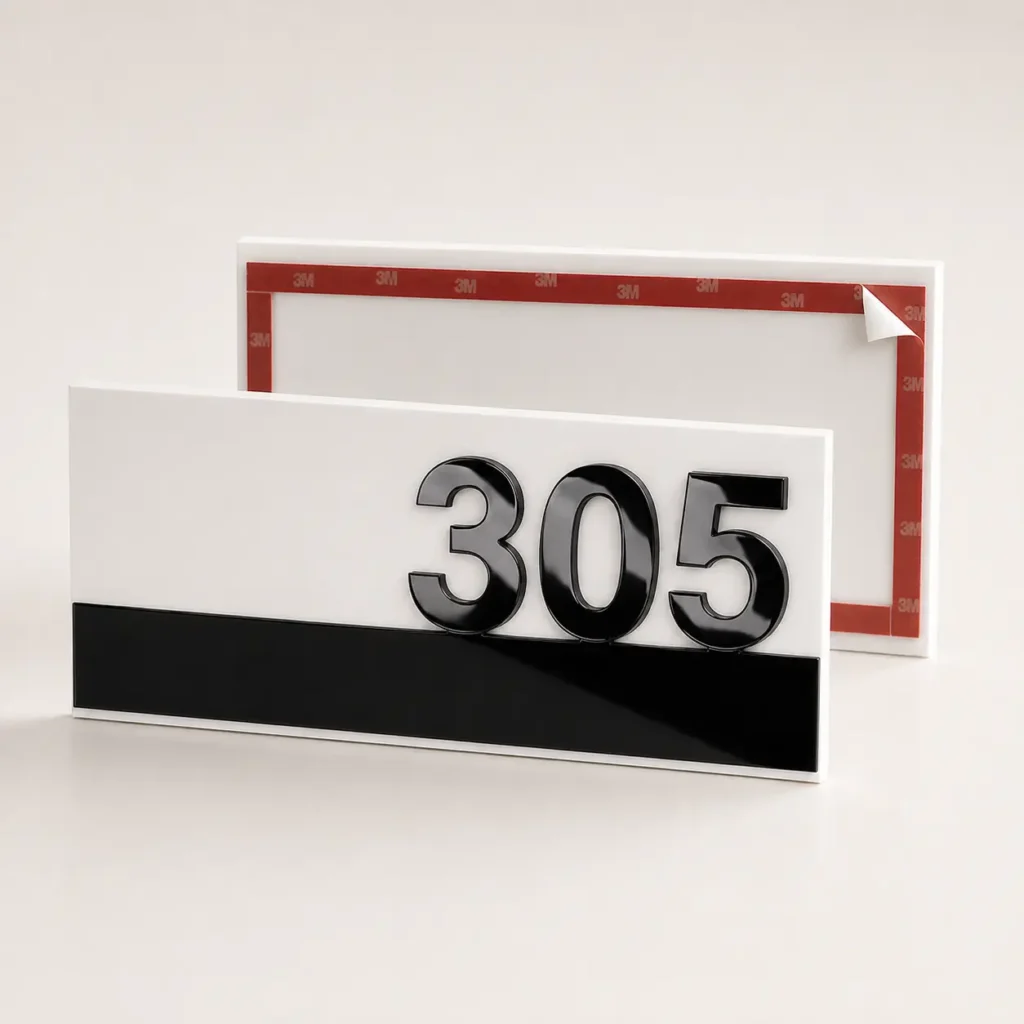
For a small, lightweight acrylic name plate on a smooth indoor surface, quality pre-applied 3M tape is usually the simplest option. For larger, heavier, layered or exterior name plates, stud mounting is generally the safer and more professional choice. The correct method depends on the plate size, construction, wall surface and weather exposure—not just personal preference.
This guide explains when to use adhesive mounting, when to choose studs, and what to check before fixing a custom name plate to a door, tile, granite, painted wall or exterior entrance.
Ask Which Mounting Method Suits Your Wall
3M tape or studs: which is better for a name plate?
Neither method is universally better. The right choice depends on where and how the name plate will be installed.
| Factor | 3M tape mounting | Stud mounting |
|---|---|---|
| Best plate type | Small and lightweight | Medium, large, layered or premium plates |
| Best surface | Smooth, clean, dry and non-porous | Sound wall, masonry, wood or suitable cladding |
| Drilling required | No | Usually yes |
| Visual effect | Plate sits close to surface | Floating, premium standoff appearance |
| Outdoor suitability | Limited; depends heavily on surface and exposure | Generally preferred for larger exterior plates |
| Removal | Can be difficult without damaging paint or adhesive | Fixing holes remain after removal |
| Installation skill | Easy if alignment is correct | More accurate measuring and drilling required |
When should you use 3M tape for a name plate?
Adhesive mounting works best when the name plate is compact, relatively light and being fixed to a clean, smooth surface. Typical examples include apartment door numbers, office cabin plates and small indoor acrylic name plates.
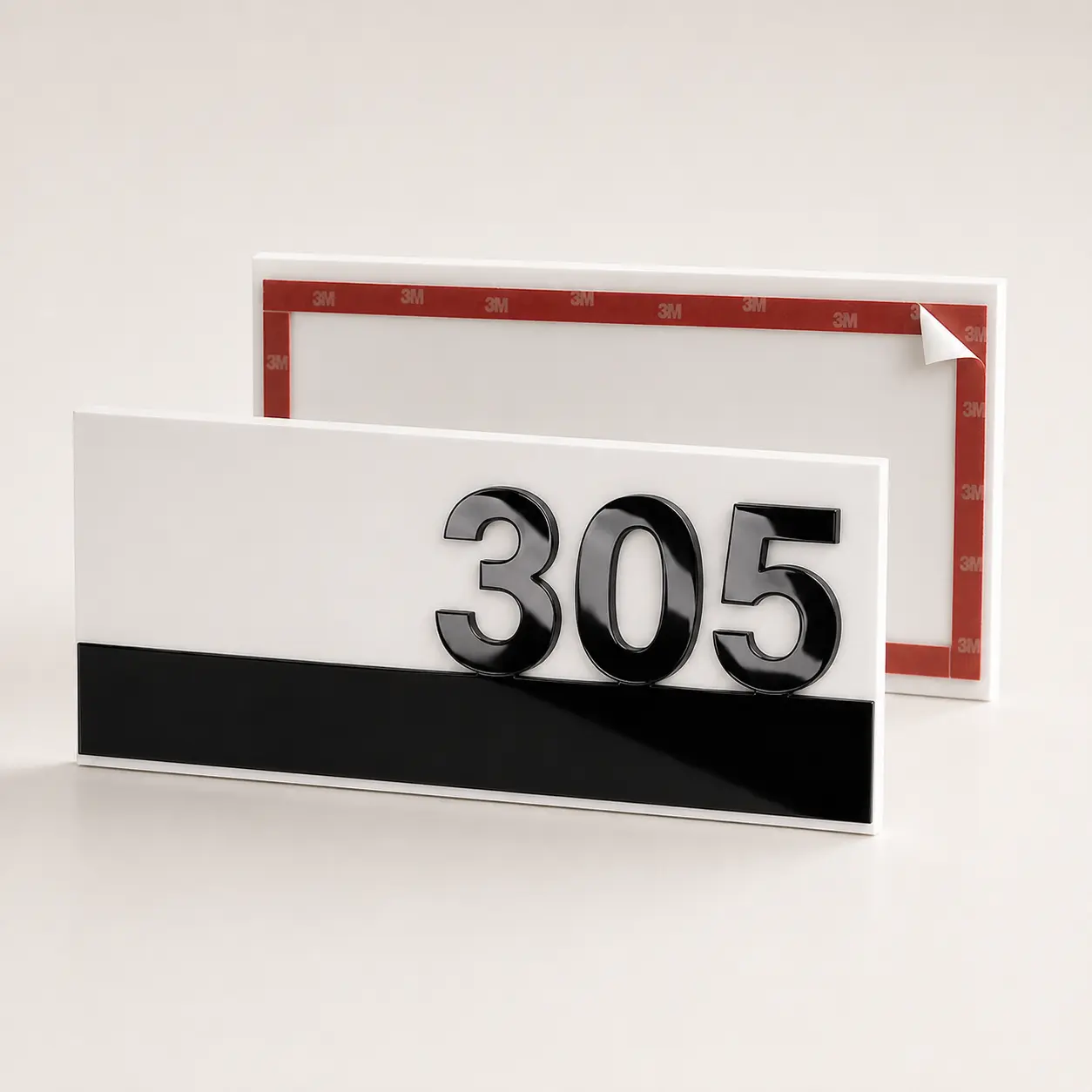
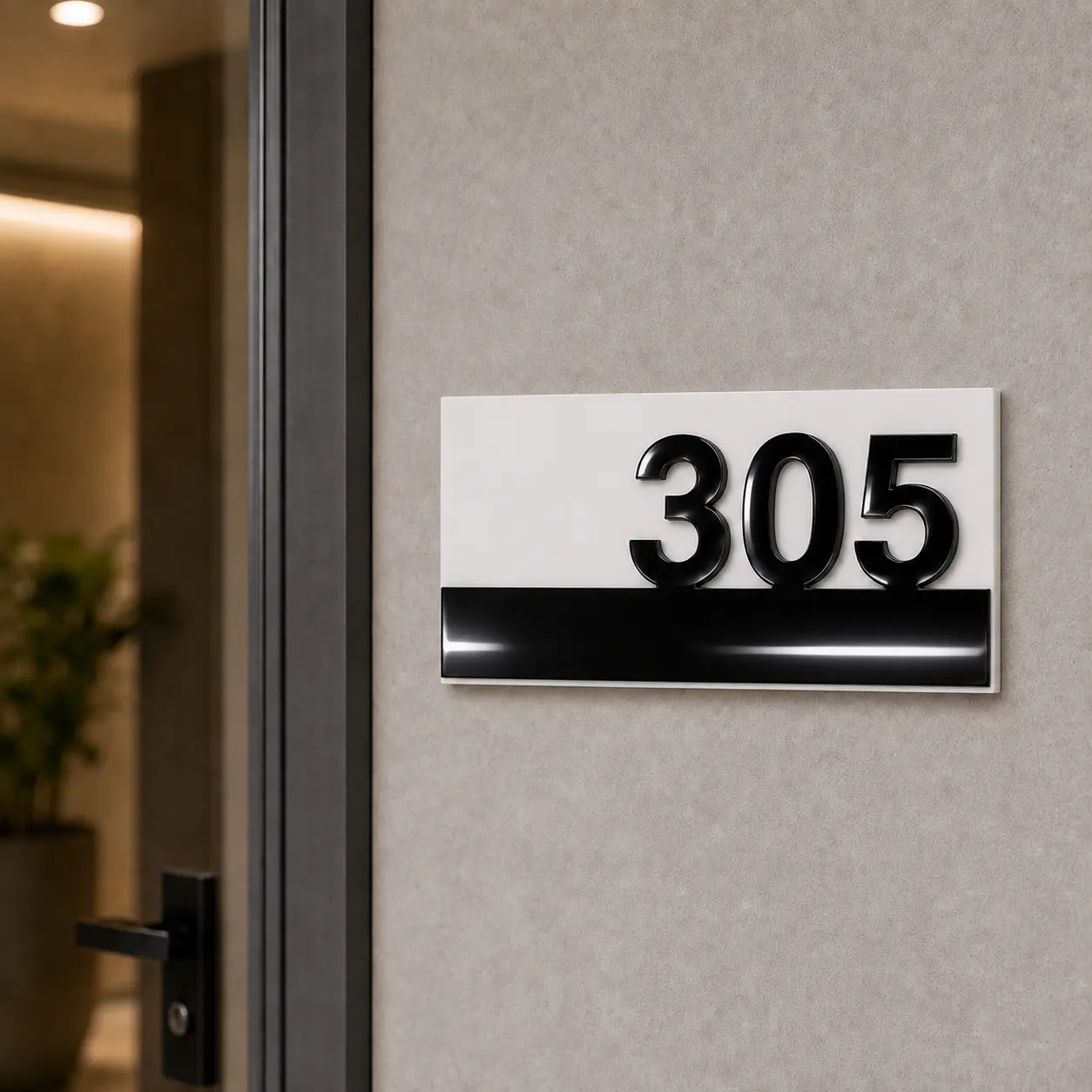
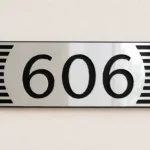
A good example is Bright N Wall’s 5 × 10 inch acrylic door number plate. It uses a 3 mm white acrylic base with a 3 mm raised black or mirror-gold top layer and is supplied with pre-applied 3M double-sided tape. The screw-free mounting is well suited to smooth doors and indoor entrance surfaces.
3M tape is most suitable when:
- The plate is small and lightweight.
- The surface is smooth, clean, dry and dust-free.
- You want a no-drill installation.
- The location is indoors or protected from direct rain and severe heat.
- The plate can sit flat against the surface without gaps or warping.
Which surfaces are suitable for adhesive mounting?
Adhesive strength depends as much on the wall or door as on the tape itself. Smooth surfaces generally allow better contact than rough or powdery ones.
| Surface | 3M tape suitability | What to check |
|---|---|---|
| Glass | Usually good | Clean thoroughly and remove oil or dust |
| Glossy laminate | Usually good | Surface must be flat and dry |
| Smooth tile | Usually good | Avoid fixing across deep grout lines |
| Polished granite | Usually good | Degrease and dry before installation |
| Smooth painted door | Possible | Paint must be fully cured and firmly bonded |
| Textured wall | Poor | Limited adhesive contact area |
| Powdery or chalky paint | Poor | Tape may pull away with the surface layer |
| Damp exterior wall | Not recommended | Moisture can reduce reliable bonding |
When should you choose stud mounting?
Stud mounting is the preferred option when the name plate is larger, heavier, layered, installed outdoors, or designed to create a floating premium appearance. Studs mechanically secure the plate rather than depending only on adhesive contact.
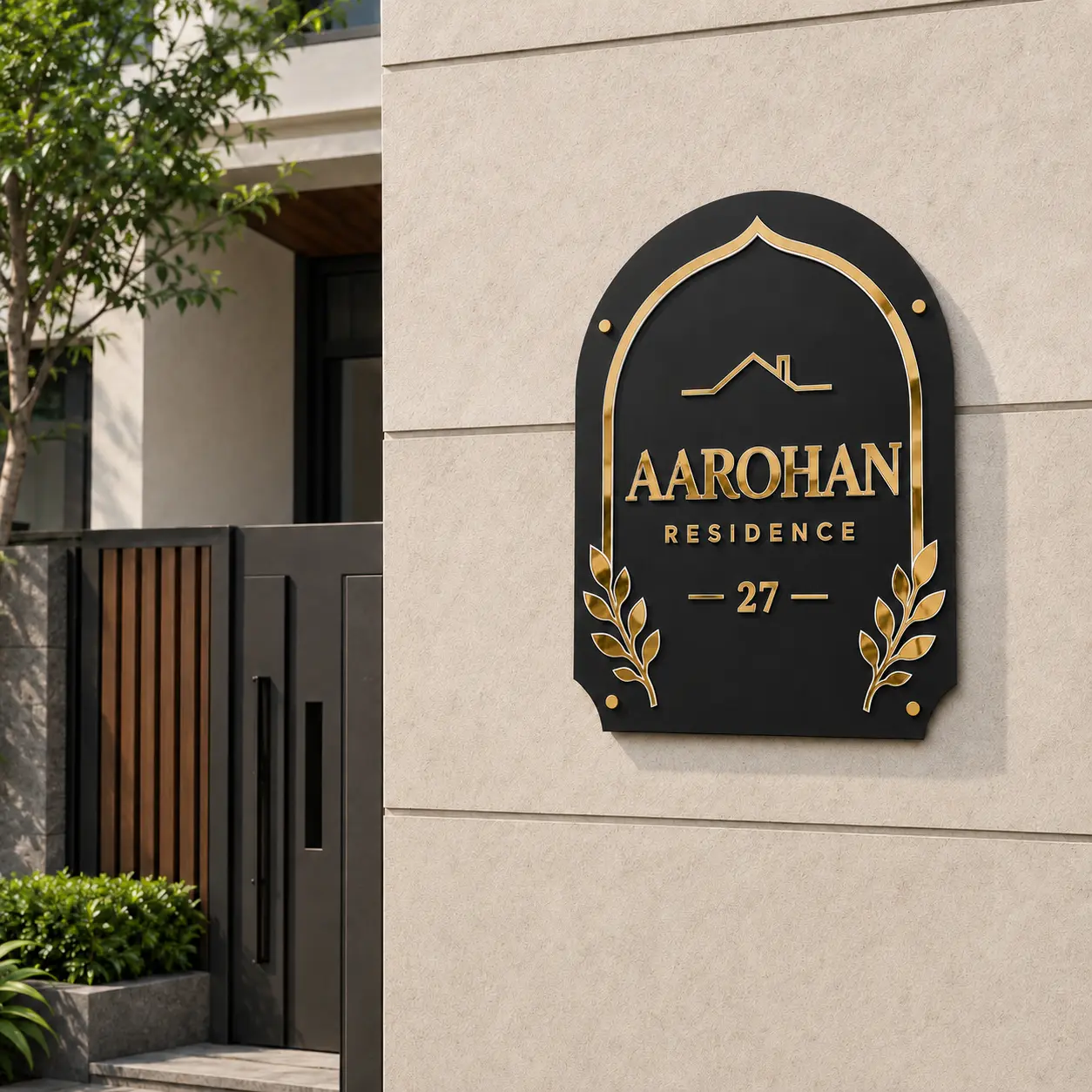
For example, Bright N Wall’s 15 × 24 inch Premium Arched Botanical Acrylic House Name Plate uses a solid 4 mm matte-black acrylic base, mirror-gold and white offset layers, and four gold-colour studs. This construction is much larger than a compact apartment plate, so stud mounting is more appropriate.
Stud mounting is usually better when:
- The name plate is large or heavy.
- The design has several acrylic or ACP layers.
- The plate is installed on an exterior entrance wall.
- The surface is too rough or uneven for reliable tape adhesion.
- You want a visible gap between the wall and plate for a premium floating effect.
- The design includes rear halo lighting or concealed wiring.
Is 3M tape strong enough for an acrylic name plate?
It can be, but only when the plate, adhesive, surface and environment are suitable. A common mistake is to judge adhesive mounting only by the stated strength of the tape. In practice, bonding can fail because of dust, loose paint, textured walls, moisture, heat, uneven surfaces or insufficient pressure during installation.
For this reason, Bright N Wall uses adhesive mounting mainly where the product specification specifically calls for it. Larger or exposed products should not automatically be converted to tape mounting just to avoid drilling.
Can I use tape on a painted wall?
Yes, but it carries more risk than glass, tile or laminate. The adhesive may hold firmly while the paint layer itself separates from the wall. Fresh paint should be allowed to cure fully before anything is attached, and weak, dusty or peeling paint should never be treated as a reliable mounting surface.
If preserving the paint is more important than avoiding holes, ask for advice before ordering. Depending on the plate size and wall condition, another installation method may be safer.
Are studs better for outdoor name plates?
For most large outdoor acrylic and ACP name plates, studs or another mechanical fixing method are generally preferable. Outdoor entrances introduce variables such as heat, rain, humidity, wall texture and wind exposure. Mechanical mounting reduces dependence on the surface bond alone.
The material itself also matters. For rain-exposed entrances, gates and coastal conditions, compare the options in our outdoor name plate material guide before choosing the plate and mounting method together.
What about LED or backlit name plates?
Backlit name plates normally need space behind the front panel for LEDs, wiring and light spread. A standoff or stud-based installation is therefore usually more practical than mounting the plate completely flush with adhesive tape.
Bright N Wall’s arched acrylic residence plate is available with a concealed warm-white 2700–3000K rear halo option. The four-stud installation supports the floating gap needed for the light to wash onto the wall. For more guidance, see the LED name plate buying guide.
How do you install a small name plate with 3M tape?
- Check the surface: it should be smooth, firm, dry and free from loose paint.
- Clean it: remove dust, oil and moisture, then allow the area to dry completely.
- Mark the position: use a level or light pencil reference before removing the liner.
- Test the alignment: hold the plate in position first because strong adhesive can be difficult to reposition.
- Remove the liner: avoid touching the exposed adhesive with dusty or oily fingers.
- Press evenly: apply firm, even pressure across the plate rather than pressing only the centre.
- Avoid immediate disturbance: do not repeatedly pull or reposition the plate after bonding.
How are stud-mounted name plates installed?
- Position the plate at the final height and confirm it is level.
- Mark the fixing points accurately through the stud or spacer positions.
- Check for concealed electrical or plumbing lines before drilling.
- Drill the required holes using the correct bit for the wall material.
- Insert the appropriate plugs or anchors when required.
- Fix the studs or standoffs and place the plate carefully.
- Tighten evenly without over-stressing acrylic around the holes.
For large, heavy, backlit or high-value name plates, using a local installer or experienced workman is recommended. The exact fixing hardware should match the wall material.
Which mounting method should you choose by name plate size?
Size alone does not determine the answer, but it is a useful starting point.
| Typical plate size | Common mounting choice | Notes |
|---|---|---|
| 5 × 10 or 6 × 12 in | 3M tape can work | Best for lightweight indoor plates on smooth surfaces |
| 8 × 16 or 10 × 18 in | Depends on weight and location | Studs become preferable for layered or exterior designs |
| 12 × 18 in and above | Usually studs | Especially for layered acrylic, ACP or exposed walls |
| LED/backlit designs | Stud/standoff mounting | Provides space for lighting and concealed wiring |
Also check our name plate size guide for apartment doors and 2026 house name plate buying guide before finalising a custom order.
What should you send before ordering?
- A photo of the exact wall, door or gate where the name plate will be installed.
- Approximate usable width and height.
- Whether drilling is allowed.
- Whether the location is indoor, covered outdoor or fully rain-exposed.
- The preferred name plate size and material.
- Whether you want a flush look or a floating stud-mounted look.
A wall photo is especially useful because the best fixing method for polished granite may be different from the best method for rough plaster, cladding or a painted exterior wall.
Send Wall Photo & Size on WhatsApp
Frequently asked questions
Can I install an acrylic name plate without drilling?
Yes, if the plate is lightweight and the mounting surface is smooth, dry and suitable for high-strength double-sided tape. Larger or exterior plates may still require studs or screws.
Will 3M tape damage wall paint?
It can. Strong adhesive may pull weak or poorly bonded paint away during removal. The risk depends on the paint, surface preparation and how long the tape has been installed.
Can I use 3M tape on granite or tile?
Smooth, clean granite and tile are generally better adhesive surfaces than rough plaster. The surface must still be dry, clean and free from oil, polish residue or dust.
How many studs are needed for a name plate?
It depends on size, weight and design. Many larger rectangular or arched acrylic name plates use four fixing points, but the final hardware should follow the product design and wall condition.
Can a local workman install a stud-mounted name plate?
Yes. A local carpenter, sign installer, electrician or general workman familiar with drilling and wall plugs can usually install it, provided the fixing points and wall type are checked first.
What mounting method is best for a backlit name plate?
Stud or standoff mounting is usually preferred because it creates space behind the plate for LEDs, wiring and the rear halo effect.
Explore: Acrylic Name Plates · 5 × 10 Door Number Plate · Premium Stud-Mounted Arched Name Plate
 House Name Plates
 Office Sign Boards
 PVC Jaali Design
 PVC Roof Borders
 PVC Gable Jaali
 Corporate Gifts
 Wall Art
 Wall Clocks
 Number Plates
 Diwali Decorations
 Shelves & Storage