
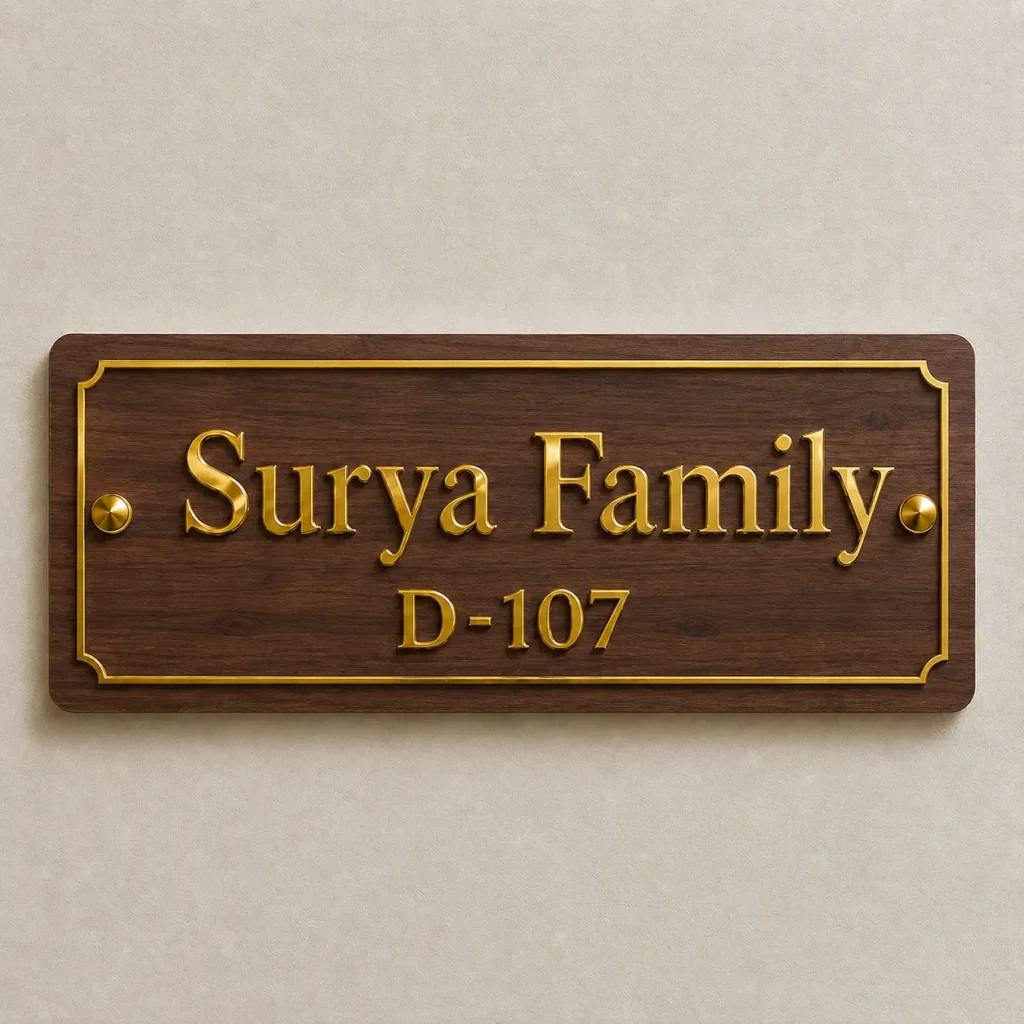
The best outdoor name plate material depends on how much rain, sun, humidity and physical exposure the entrance receives. A stylish material that performs well in a covered apartment corridor may not be the best choice for an open compound wall or gate.
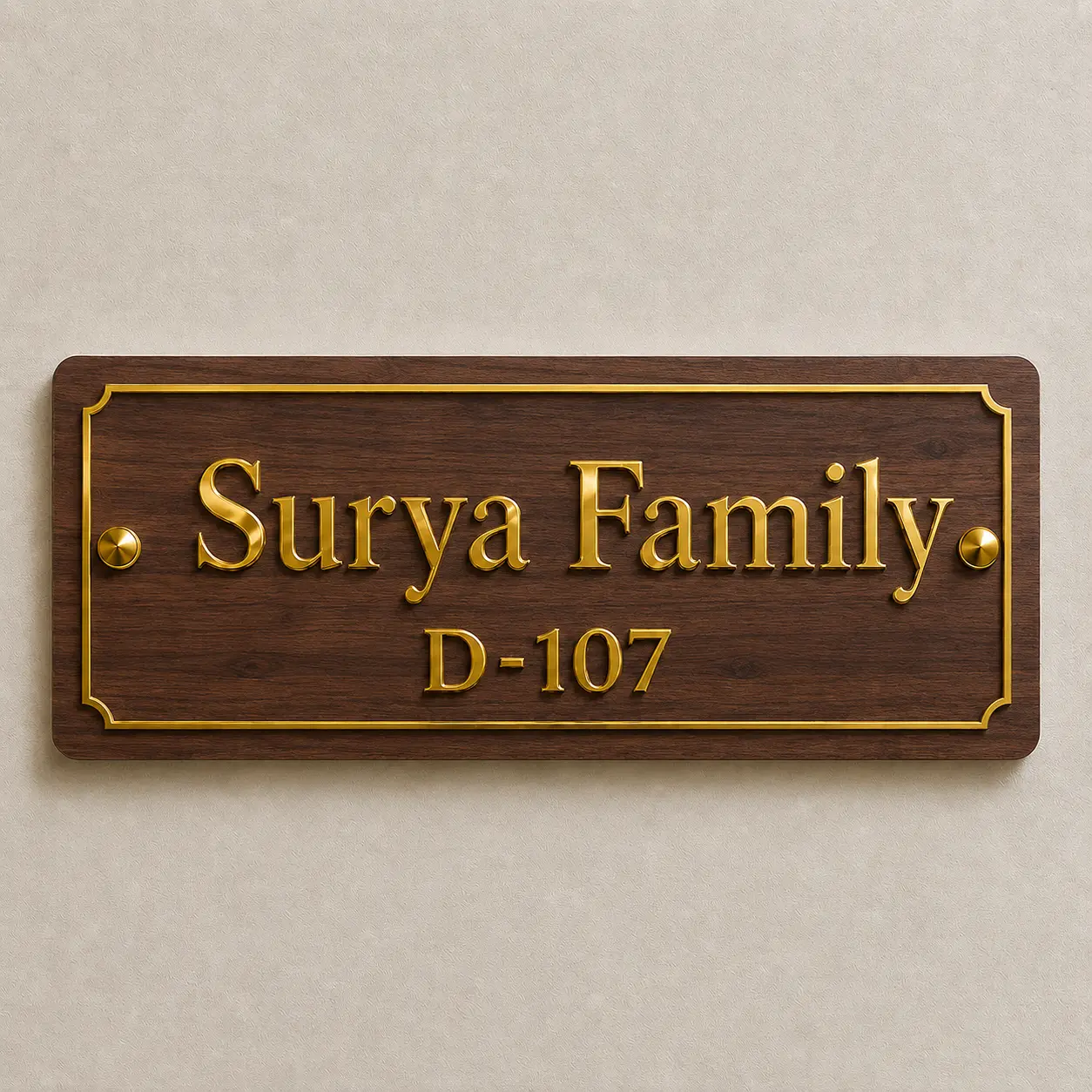
Outdoor name plate materials at a glance
| Material | Best location | Main advantage | Watch for |
|---|---|---|---|
| ACP | Outdoor walls, covered gates and humid entrances | Stable, light and moisture resistant | Edge finishing and mounting quality |
| Cast acrylic | Covered entrances and apartment corridors | Premium colour, gloss and clean laser-cut detail | Surface scratches and direct harsh exposure |
| HPL | Open exterior walls and high-exposure locations | Strong exterior performance and premium texture | Higher weight and cost |
| Mirror/brushed acrylic | Raised letters on a protected base | Luxury gold or silver appearance | Needs careful cleaning and suitable backing |
| Brushed ABS sheet | Indoor or well-covered entrances | Affordable metallic look and engraving | Not our first choice for fully exposed locations |
| PVC foam board | Larger economical signs and architectural work | Lightweight and easy to CNC-cut | Use suitable thickness and support |
1. ACP: the practical all-round outdoor base
Aluminium composite panel, commonly called ACP, is a strong choice for outdoor name plates because it is lightweight, dimensionally stable and handles moisture better than many decorative indoor sheets. It is available in solid colours and wood-look finishes such as walnut.
ACP works especially well as the base layer, with acrylic, mirror acrylic or brushed lettering fixed on top. This gives the plate weather practicality without losing the premium layered appearance. Our Ganapati walnut ACP name plate is an example of this construction.
2. Acrylic: best for premium covered entrances
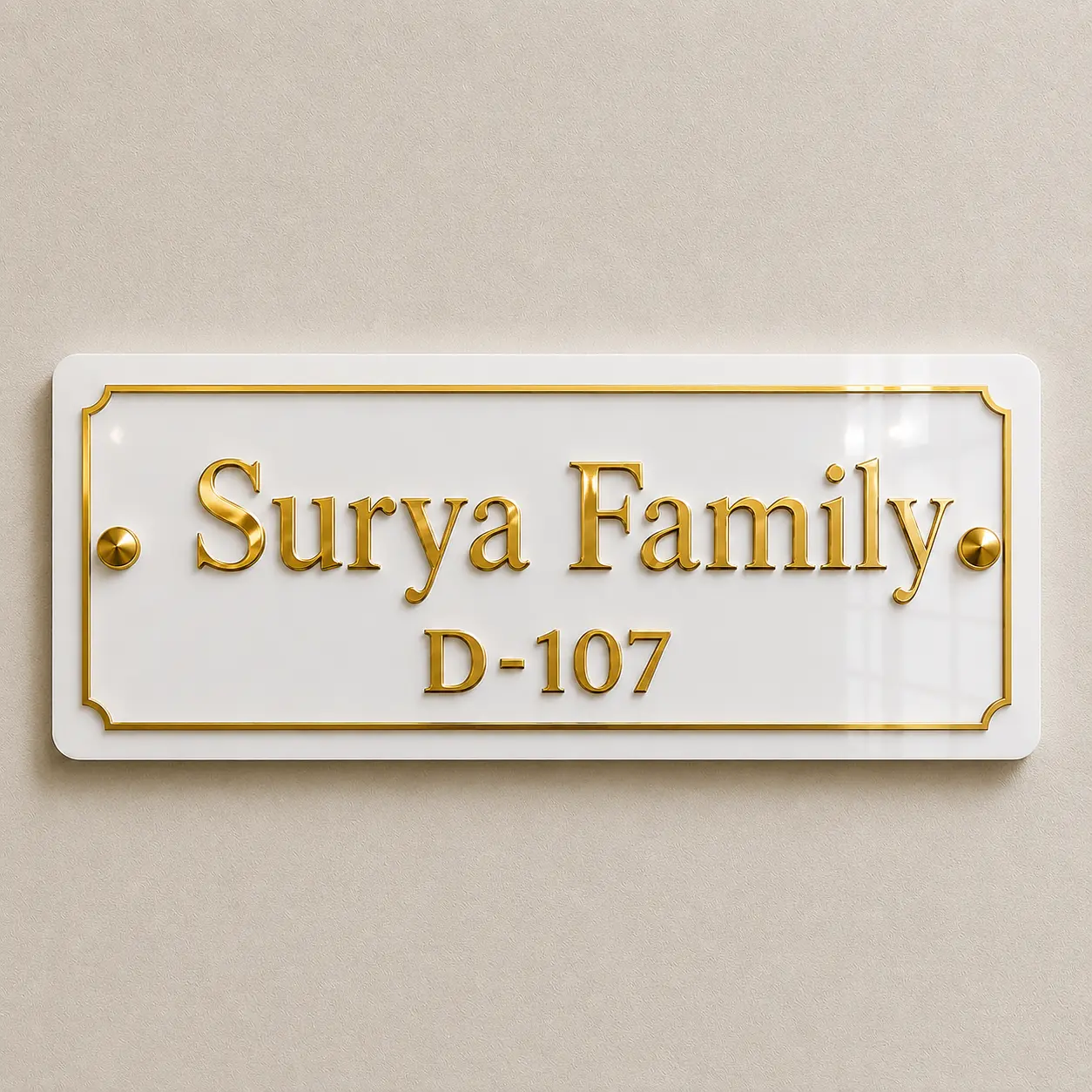
Cast acrylic gives crisp laser-cut edges, rich black or white colour and reflective mirror finishes. It is ideal for apartment corridors, porches and entrances protected by a roof. Layered acrylic can create a clean 3D effect with names, numbers, symbols and borders.
For an open wall receiving intense sun and rain throughout the day, confirm the colour, thickness, mounting and protection required. Mirror surfaces also show dust and water marks more easily than matte finishes.
3. HPL: for demanding exterior locations
High-pressure laminate is worth considering for exposed exterior installations, large entrance boards and applications where durability is the priority. It can offer a premium wood or solid finish with good strength, though it is generally heavier and may cost more than a simple acrylic or ACP design. Proper mechanical mounting is important.
4. Brushed and mirror sheets: use them strategically
Gold mirror, silver mirror and brushed surfaces are usually best used as raised lettering or a decorative face over a stable base. Brushed ABS provides an economical metallic appearance and supports dark engraving, but we recommend it mainly for indoor or well-covered entrances unless the specific construction is approved for the exposure.
5. PVC foam board: useful for larger economical applications
PVC foam board is lightweight, moisture resistant and suitable for CNC-cut shapes. Thickness matters: thin sheets need support, while thicker sheets are better for larger forms. For a compact luxury house plate, ACP, acrylic or HPL generally provides a finer finish; PVC is more common for large exterior décor and signage.
Which material should you choose?
- Apartment corridor: Layered acrylic or mirror acrylic.
- Covered villa porch: Acrylic, ACP with acrylic letters, or HPL.
- Open compound wall: ACP or HPL with secure mechanical mounting.
- Coastal or high-humidity area: Prefer a stable outdoor base, protected edges and corrosion-appropriate hardware.
- Gate mounting: Keep weight, vibration and fixing points in mind; share the gate photo before production.
Installation matters as much as material
Even the right material can fail if the mounting method is unsuitable. Tape requires a smooth, clean, dry surface and is better for lightweight covered installations. Studs, spacers or screws are preferred for heavier plates, rough walls and open exterior locations. Seal or protect drilled points where the wall condition requires it.
Frequently asked questions
Is acrylic waterproof?
Acrylic itself handles moisture, but an outdoor name plate is a complete assembly. Adhesives, layered joints, hardware, backing, print and installation all need to match the exposure.
Is ACP better than acrylic outdoors?
ACP is often the more practical base for exposed or humid locations. Acrylic offers a more premium decorative finish and can be combined with ACP as raised lettering.
What is best for direct rain?
ACP or exterior-grade HPL with mechanical fixing is usually the safer starting point. Share the exact location so material thickness and construction can be confirmed.
Need a Custom Size and Design? Send Requirements
Send a photo of the entrance and tell us whether it receives direct rain and sunlight. Bright N Wall will recommend the right base, top layer, thickness and mounting method.
 House Name Plates
 Office Sign Boards
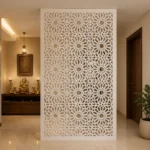 PVC Jaali Design
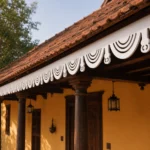 PVC Roof Borders
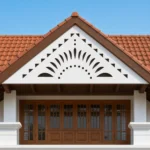 PVC Gable Jaali
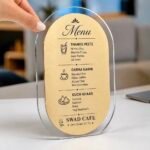 Corporate Gifts
 Wall Art
 Wall Clocks
 Number Plates
 Diwali Decorations
 Shelves & Storage
Pingback: Walnut ACP House Name Plate with Gold Mirror Letters